
Why Did Jesus Die for Our Sins?

Updated: Sep 24
A Foundational Look at Sacrifice and Restoration
You've probably heard the phrase "Jesus died for our sins" your whole life, whether you grew up in church or not. But why did Jesus die for our sins? Why did it have to be death? Why does it matter that He rose again? And what does any of it have to do with you, today?
I hope to answer some of these questions today, no screaming, no Bible-thumping. I say that as someone who's lived through real church hurt, a hard childhood, and once turned my back on God completely. I'm also autistic, which means abstract theological claims and "just have faith" never worked for me. I needed the logic first before the leap of faith. I need things to hold up under scrutiny. If you knew my full story, you'd understand that choosing Him was never handed to me by birth. I chose Him because He sought me out and I followed Him.
Why Death?
To understand why Jesus died, we have to start with why death was even necessary in the first place.
Sin became part of our lives, and God, being just, cannot tolerate it. If He tolerated sin of any kind, He'd have to tolerate all of it. Good would stop existing, and everything would blur into grey. There had to be a firm line between right and wrong, or none of it would mean anything.
Sin leads to permanent eternal death. Not just the kind where your heartbeat stops, but a deeper death, one that separates us from God's presence completely and despite popular finger pointing that is the humans' choice to make, not God's, I'll link that article below.
This is the part that trips people up a lot. Sin is like a debt, and it's a debt too heavy for us to pay on our own. It's too dark, too unholy, for any human to carry into heaven. So Jesus, the Son of God, took that debt into Himself.
He carried it, so that you could be free of it.
Not Just a Death, a Sacrifice
It's tempting to think of Jesus's death the way we think of a martyr's death. Someone dying for a cause, or for other people, and then it's over. But Jesus's death wasn't martyrdom. It was a complete and perfect sacrifice.
If He had simply been a martyr, He would have known His pain would end the moment He was resurrected. But that's not what happened. The night before He was crucified, He prayed so intensely that He sweat blood, a real medical condition called Hematidrosis, caused by extreme stress, fear, or facing death.
Why would He experience that if He knew His resurrection was coming?
Because He wasn't just facing His own death. He was carrying every single person's sins, from the beginning of time to the end. Imagine every sin you've ever committed, multiplied by billions of people across all of history and the future.
That's what He carried, willingly, to the cross for all of us.
That's not martyrdom. That is the ultimate definition of love.
What We're Restored To
So what was all of this for? Genesis tells us that when God finished creating everything, He looked at it and called it very good. The original Hebrew word used is towb, which means so much more than just the simple English word "good." It carries the sense of beautiful, merriment, bountiful, pleasant, precious, joyful. Something rich and full, not just "good".
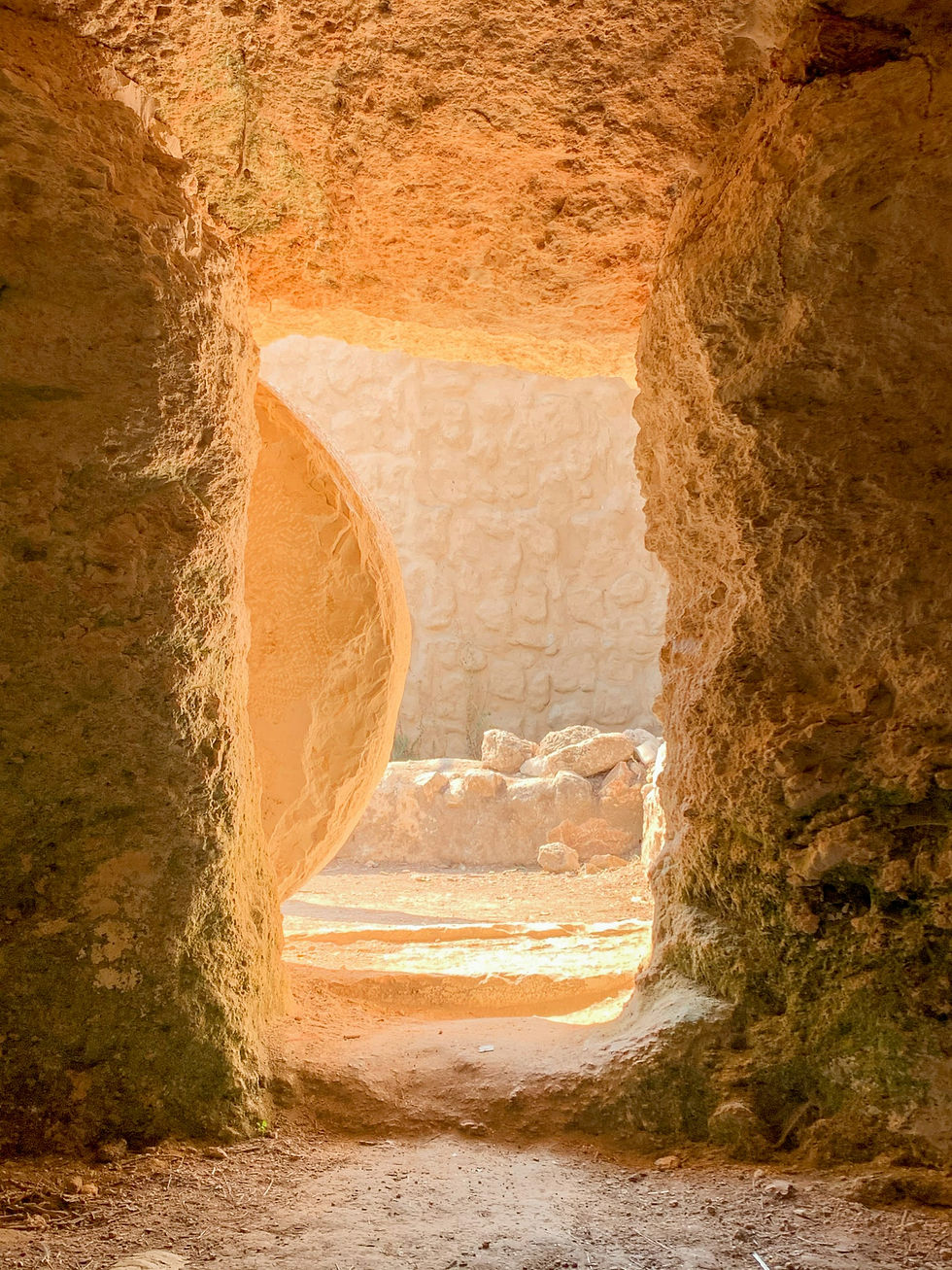
Before sin entered the picture, God walked with Adam and Eve in the garden of Eden. They were in His presence, completely, with nothing broken between them. Then sin entered, and that closeness was lost. But it wasn't lost forever. Jesus's death and resurrection are what make the way back to God's presence possible.
Scripture reassures us we'll be given new, transformed bodies, free of everything that's gone wrong in this world. Not nameless, faceless spirits, but ourselves, fully known and fully whole. And we're promised a new Earth, a new heaven, a restored place where we'll be with Him again, just like it was always meant to be.
Why It Matters
Jesus's death paid a debt we could never pay ourselves, and His resurrection proves that death doesn't have the final word. And what's waiting for us, if we choose Him, is a restoration of everything that was lost. Not just spiritually, but a real, physical, whole existence in His presence again.
That's what it means that Jesus died for our sins. Not a simple transaction, but the opening of a door back to what we were always meant to have.
© 2025 Jane Isley.
🔑 Hell, Choice, and Your Accountability — Why eternal separation from God is a human choice, not something imposed by Him.
Press Ctrl + P (Windows) or Cmd + P (Mac) to print this article or save it as a PDF.


Comments