
The Third Temple Problem: Did Christ Already Fulfill the Temple?
- Guest Writer

- Mar 16
- 5 min read
By Guest Author: Jeff Barlatier
Some Christians are waiting for a Third Temple that the New Testament says Christ already fulfilled. That is the irony. Christians who glory in the cross sometimes sound eager for the return of the shadows.
Some Christians watch Jerusalem the way traders watch markets. Every rumor becomes a signal. Every archaeological headline becomes a prophecy update. Every red heifer becomes a countdown clock (Numbers 19). A priestly garment appears. A golden menorah is displayed. A group trains Levites.
Suddenly prophecy blogs explode. “The Third Temple is coming.”

But beneath the excitement sits a harder question: Why would Christians celebrate rebuilding a system the New Testament says Christ fulfilled?
That tension is not political. It is theological.
Because the New Testament does not restore the Temple. It redefines it.
The Temple Was Always a Signpost
For ancient Israel, the Temple was the center of the religious universe.
Sacrifice happened there (Leviticus 1–7).Priests served there (Exodus 28–29).Pilgrims traveled there (Deuteronomy 16:16).God’s presence filled the sanctuary (1 Kings 8:10–13).
But the Temple was never meant to be the destination. It was theology carved into architecture.
The New Testament explains that the entire sacrificial system functioned as a shadow pointing forward.
“We have been sanctified through the offering of the body of Jesus Christ once for all” (Hebrews 10:10).
“Where there is forgiveness… there is no longer any offering for sin” (Hebrews 10:18).
If Christ offered the final sacrifice, the system finished its task. The altar did its work. The symbol delivered its meaning. Shadows vanish when the sun rises.
Jesus Claimed to Replace the Temple
Jesus did not merely reform the Temple. He relocated it.
“Destroy this temple, and in three days I will raise it up” (John 2:19).
The audience thought he meant the building. The Gospel clarifies: “He was speaking about the temple of his body” (John 2:21). The implication was enormous. God’s presence would no longer be centered in a building.
It would be centered in Christ himself. Jesus becomes the meeting place between heaven and earth (John 1:14; John 1:51). The Temple did not disappear.
It became a person.
The Temple Moved
The apostles pushed the idea even further.
“Do you not know that you are God’s temple?” (1 Corinthians 3:16)
"You yourselves like living stones are being built up as a spiritual house” (1 Peter 2:5)
The Temple moved.
From one building in Jerusalem to a global community filled with the Spirit (Ephesians 2:19–22). From architecture to people. From stone to Spirit.
Cosmic Geography: Sacred Territory
The Bible assumes something modern readers often miss.
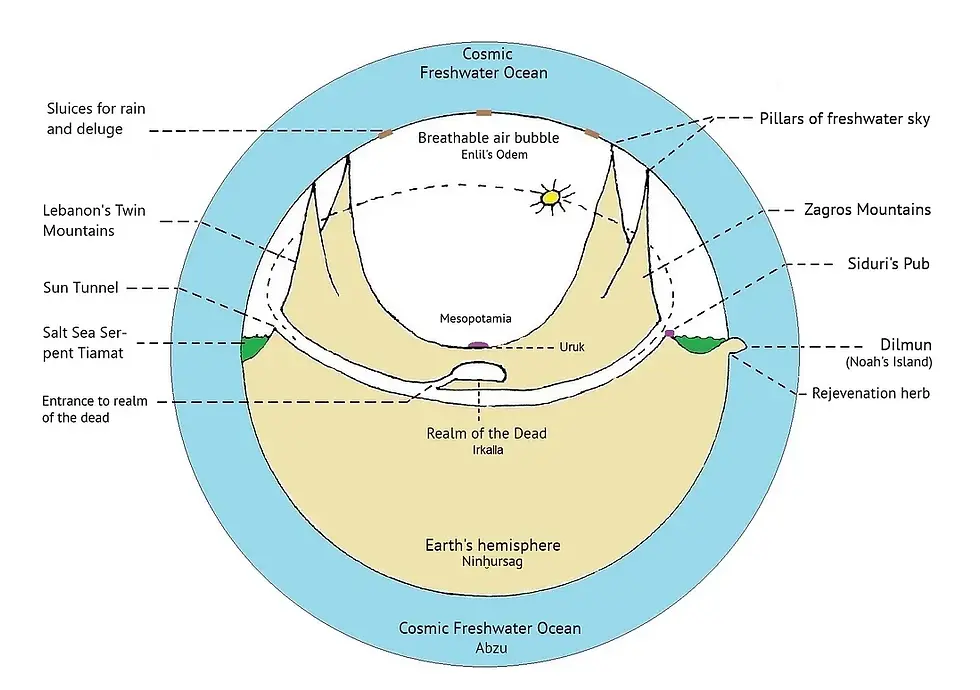
Geography is spiritually charged. Mountains were meeting places between heaven and earth (Exodus 19; Psalm 48). Sacred territory represented divine authority.
“When the Most High gave the nations their inheritance… he fixed their borders according to the number of the sons of God” (Deuteronomy 32:8).
Daniel even describes spiritual princes connected with nations (Daniel 10:13–20).
History unfolds on earth. But it reflects unseen realities. Sacred geography produces sacred conflict.
70 AD: The Day the Temple System Ended
In the year 70 AD, the Temple system came to a violent end.
Roman legions under General Titus surrounded Jerusalem during the Jewish revolt.
The city starved. Civil war erupted inside the walls. Then the Romans breached the defenses.
The historian Flavius Josephus described the moment the Temple caught fire: “The temple was now in flames… the blood was larger in quantity than the fire.”— The Jewish War (Josephus, 1987)
The sanctuary burned. The altar was destroyed. The sacrificial system ceased. Even today, Judaism functions without Temple sacrifice.
The event also fulfilled something Jesus had predicted decades earlier: “Not one stone here will be left upon another that will not be thrown down.”— Matthew 24:2
For early Christians, the destruction confirmed a theological shift already underway.
The Temple era had ended. Christ had become the final sacrifice (Hebrews 9:26).
How Dispensationalism Created the Modern Temple Expectation
For most of Christian history, the Church did not expect a rebuilt Temple.
But in the 1800s, theologian John Nelson Darby developed a prophetic framework dividing history into dispensations.

Darby taught that Israel and the Church had separate prophetic destinies. This idea spread widely through the Scofield Reference Bible. Soon prophecy charts and conferences popularized the expectation of a future Temple. But many scholars argue the New Testament points in a different direction.
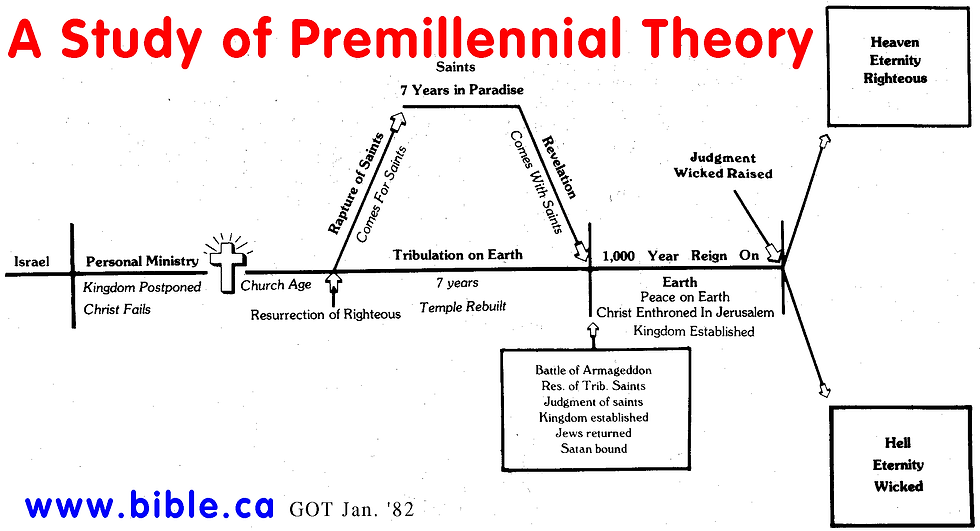
The story moves from Temple to Christ, not from Christ back to Temple (Sproul, 1999; Wright, 1996).
C. S. Lewis: When the Symbol Gives Way to the Reality
C. S. Lewis often explained that Christianity is the moment when symbols become reality.
In Reflections on the Psalms, he wrote that what once appeared as shadows in Israel’s worship became historical reality in Christ (Lewis, 1958).
For centuries the Temple functioned as sacred symbolism. A priest stood between God and humanity. An altar carried sacrifice. A sanctuary represented God’s presence.
But Christianity claims these symbols reached their fulfillment in Christ.
Jesus becomes the true High Priest (Hebrews 4:14–16).
Jesus becomes the final sacrifice (Hebrews 10:10–12).
Jesus becomes the true Temple (John 2:21).
Lewis compared religious symbols to maps. Maps guide travelers. But once the destination is reached, the map is no longer the focus. The Temple was the map. Christ is the destination.

Why the Third Temple Debate Is Really About Jesus
At first glance, the debate about a Third Temple seems like an argument about prophecy.
It isn’t.
It is a question about identity. If Jesus is the Messiah, the Temple fulfilled its purpose. If he is not, the Temple remains unfinished business.
Jesus becomes the true meeting place between God and humanity (John 1:14).
He becomes the final sacrifice for sin (Hebrews 10:12).
He becomes the great high priest who mediates between God and humanity (Hebrews 4:14–16).
Everything the Temple represented pointed forward. The New Testament claims the moment arrived. The shadow met the substance. The map reached the destination.
Which leaves one final question. If Christ fulfilled the Temple, why would Christians want to go back?
References
The Holy Bible, English Standard Version. (2001). Crossway.
Heiser, M. S. (2015). The unseen realm: Recovering the supernatural worldview of the Bible. Lexham Press.
Josephus, F. (1987). The Jewish War (G. A. Williamson, Trans.). Penguin.
Lewis, C. S. (1958). Reflections on the Psalms. Harcourt Brace.
Sproul, R. C. (1999). The last days according to Jesus. Baker Books.
Wright, N. T. (1996). Jesus and the victory of God. Fortress Press.
Temple Institute. (n.d.). Temple preparation and artifacts. https://templeinstitute.org


Comments