
Ancestral Guilt and Pride: Why Christianity Rejects Collective Moral Identity

The Confusion
In an age obsessed with identity, many people have begun to speak about history in ways that blur a basic moral truth: we are not our ancestors. Yet in modern cultural and political debates, people are increasingly encouraged to either carry the guilt of those who came before them or claim credit for achievements they never personally accomplished.
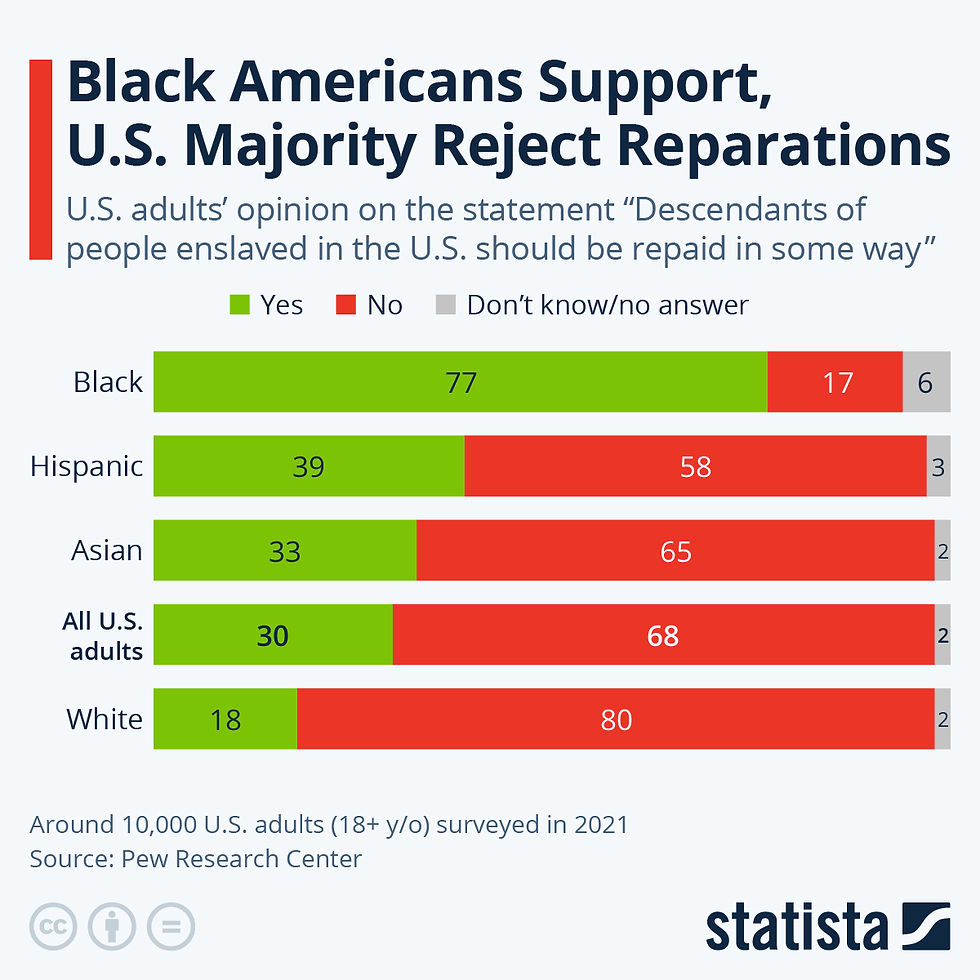
Both impulses are misguided.
The idea that we inherit the moral crimes of our ancestors is deeply flawed. But the opposite idea—that we inherit their greatness and therefore deserve honor for it—is equally mistaken. Both errors stem from the same root problem: the collapse of individual moral responsibility.
Christian theology offers a powerful corrective to this confusion. The Scriptures consistently affirm that each person is responsible for their own actions, not the actions of previous generations. At the same time, Christianity refuses to erase history or pretend that the past does not shape the present.
The tension between these truths—historical inheritance and individual responsibility—lies at the heart of many of our modern social conflicts.
The Guilt
The clearest statement of this principle appears in the Old Testament.
In the Book of Ezekiel 18:20, the prophet writes: “The son shall not bear the guilt of the father, nor the father bear the guilt of the son.”
This was a radical statement in the ancient world. Many ancient cultures believed that the sins of one generation permanently stained the next. Families, tribes, and entire peoples were often judged collectively. But God rejected that logic.
The Biblical message is simple but profound: moral responsibility is personal. A person is judged according to their own actions, their own choices, and their own conduct.
This principle protects human dignity. It means no one is permanently condemned because of their lineage, their tribe, or their bloodline. In other words, the Bible rejects the idea of collective inherited guilt. But if guilt cannot be inherited, neither can moral credit.
The Pride
Modern debates often revolve around historical guilt, but the same flawed logic appears on the opposite side of the argument.
Many people take pride in historical accomplishments achieved by people who share their nationality, ethnicity, or culture. They speak as if they personally participated in the achievements of previous centuries.
But this too is an illusion.
If we cannot be blamed for the sins of our ancestors, we also cannot claim ownership of their greatness.
A modern person did not build the cathedrals of Europe. They did not draft the founding documents of nations. They did not invent the technologies that transformed civilization centuries ago.
Those accomplishments belong to the individuals who actually did them. History can inspire us. It can shape our cultural inheritance. But it does not grant us moral credit.
This cuts both ways.
Those who want modern people to feel ashamed for historical crimes commit the same error as those who boast about historical triumphs. Both are treating history as a kind of moral inheritance system, where guilt and glory pass through bloodlines.
Christianity rejects this entirely.
The Obsession With Collective Identity
Why has this confusion become so common today?
One reason is that modern culture has increasingly abandoned the concept of the individual. People are no longer primarily understood as unique moral agents. Instead, they are sorted into categories—race, class, nationality, gender, or political tribe.
These categories then become moral identities.
Under this framework, individuals are judged not primarily by their actions but by the historical behavior of groups they are said to belong to.

This mindset exists across the political spectrum. Some people insist that certain groups must carry historical guilt. Others insist that certain groups should feel pride because of historical accomplishments.
Both sides are participating in the same philosophical mistake: they are replacing individuals with tribes, and this approach inevitably fuels resentment and division.
When guilt becomes collective, people feel accused of crimes they never committed. When pride becomes collective, people feel entitled to honor they never earned.
Neither produces humility. Neither produces justice.
Both destroy the moral clarity that comes from evaluating individuals by their actions.
The Cycle of Resentment
This issue becomes especially explosive when discussions turn to race.
Modern racial debates often revolve around the idea that contemporary individuals should somehow carry the moral weight of historical injustices committed by people of the same racial category.
But race is a crude and historically unstable concept. The categories we use today did not even exist in the same form centuries ago.
Yet people are now asked to feel guilt or pride based on these shifting classifications.
This approach traps society in an endless cycle of resentment.
If guilt is inherited, it never disappears. Every generation becomes morally entangled in the past. Every historical injustice becomes a permanent accusation against people who had nothing to do with it.
But the Christian worldview breaks that cycle.
The gospel insists that every person stands before God individually. Not as a representative of a race, not as the embodiment of a historical tribe, but as a human being responsible for their own actions.
This does not erase history. It does not deny injustice. But it refuses to treat people as moral extensions of the dead.
Individual Responsibility: A Pillar of Christian Civilization
Ironically, the modern world’s emphasis on individual rights and moral agency grew directly out of Christian thought.
The Christian doctrine that every human being is accountable before God helped produce a civilization where individual conscience mattered. Figures like Augustine of Hippo and Thomas Aquinas developed moral frameworks centered on personal responsibility, intention, and moral agency.
Later, Christian thinkers influenced political systems that emphasized individual rights and protections against collective punishment. But today, that idea is slowly eroding.
Many modern ideologies—both secular and political—are drifting back toward ancient tribal thinking. Instead of evaluating individuals, they assign moral status to entire groups.
In doing so, they undermine one of the most important ethical insights Christianity ever contributed to human civilization.

The Christian Answer
Christianity offers a response that avoids both extremes.
It rejects inherited guilt, but it also rejects inherited pride.
The Christian does not need to carry the shame of historical crimes committed by others. But neither can the Christian boast in the accomplishments of people who lived centuries ago.
Instead, Christianity calls each person to something far more demanding: personal repentance and personal righteousness.
The Christian asks a different question than the modern culture wars.
Not: What did my ancestors do?
But: What am I doing now? Am I acting justly? Am I loving my neighbor? Am I living truthfully and courageously?
Those are the questions that matter before God.
History is real. It shapes our world, but the moral burden of history belongs to those who lived it. Our responsibility lies in the present. We cannot repent for the sins of the dead, and we cannot claim their achievements as our own.
The obsession with ancestral guilt and ancestral pride both collapse under the same truth: you did not live their life. You did not commit their sins. You did not earn their achievements. History is memory, not morality. Responsibility belongs to the living.
Press Ctrl + P (Windows) or Cmd + P (Mac) to print this article or save it as a PDF.
References:
-Book of Ezekiel 18:20 — “The son shall not bear the guilt of the father, nor the father bear the guilt of the son.”
-Book of Deuteronomy 24:16 — “Parents are not to be put to death for their children, nor children put to death for their parents; each will die for their own sin.”
-Epistle to the Romans 2:6 — “God will repay each person according to what they have done.”
-Epistle to the Galatians 6:5 — “For each one should carry their own load.”
-Gospel of Matthew 16:27 — “The Son of Man… will reward each person according to what they have done.”
-Augustine of Hippo. The City of God. Translated by Henry Bettenson. Penguin Classics.
-Thomas Aquinas. Summa Theologica. Sections addressing sin, moral responsibility, and individual accountability.
-C. S. Lewis. Mere Christianity. HarperOne.
-Dietrich Bonhoeffer. The Cost of Discipleship. SCM Press.
-Hannah Arendt. Responsibility and Judgment. Schocken Books.
-Karl Popper. The Open Society and Its Enemies. Routledge.
-Thomas Sowell. Black Rednecks and White Liberals. Encounter Books.
-Shelby Steele. White Guilt: How Blacks and Whites Together Destroyed the Promise of the Civil Rights Era. HarperCollins.
-Graph from Statista.com


Comments